Fernline Landscapes draws a planting plan for your block, your soil and your sun, with natives that cope with Hunter summers, salt wind and heavy clay, whether it is a new garden or a garden makeover. Then our own crew prepares the beds, sets out every plant where the drawing puts it, and plants, mulches and waters it in.
Before anything goes in the ground, you get a scaled drawing of the garden. It shows the beds, the paths and lawn, the levels and where the water goes, and every plant by its name and how many. You can change it as often as you like until it's right, and the drawing is included in the quote for a garden we build.
That drawing is what stops a garden makeover turning into a car boot full of plants with nowhere to go. It's also what our crew works from on the day, so the bed you agreed to is the bed you get. If the yard needs levels first, the drawing shows the retaining walls and the beds together, so the planting fits the ground it will sit on.
To draw it, we spend time in your yard first. We note which beds get morning sun and which bake all afternoon, where the southerly comes through, where water lies after rain, and what you want to see from the kitchen window, and what you'd rather not. A garden planned around those things needs less fixing later, because each plant starts in a spot it can handle.
Natives that suit the Hunter
Not every Australian plant suits Newcastle. A plant from the Western Australian sandplain can sulk in our humid summers and wet clay. So we plant mostly from the east coast, and much of it from right here.
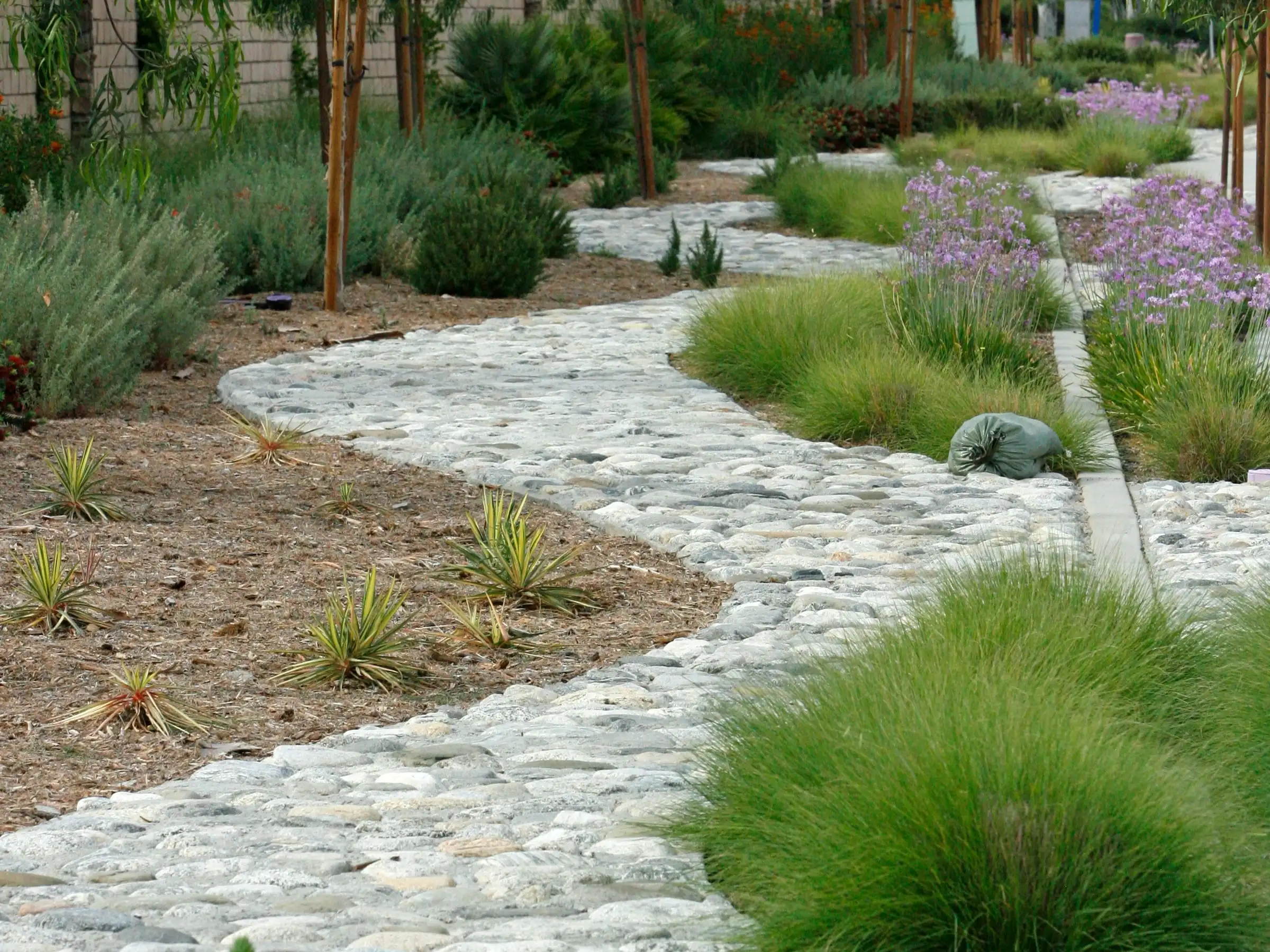
On the coast, in yards around Belmont and the shores of Lake Macquarie, salt wind is the test. Coast banksia, coastal rosemary (westringia), lomandra, white correa and pigface handle salt spray and sandy soil.
On clay, in Maryland, Wallsend and Cameron Park, plants need to cope with wet feet in winter and baked ground in February. Dianella, kangaroo grass, native wisteria (hardenbergia), callistemon and the tougher grevilleas do well, with lilly pilly for screens and hedges.
For a feature, a Gymea lily or a smooth-barked apple gives the garden one plant people remember.
Your garden makeover, step by step
Most makeovers start with a yard that already has something in it, and for a front garden our front yard landscaping guide runs through the ideas and what each one costs. We walk it with you and sort everything into three lists: what stays, what moves, and what goes. A healthy tree, an old camellia you love, or a hedge that blocks the neighbour's window usually stays. Weedy shrubs, a dying lawn edge and plants in the wrong spot go, and where a worn lawn stays, it can be relaid as new turf on prepared soil.
Then we clear, shape the new beds, fix any drainage, and build the hard parts first, so the plants don't get trampled. If your makeover includes a wall, a path or paving, that part is structural landscaping, and our contractor licence covers it.
Soil, beds and mulch
The soil decides how fast your garden grows in. On clay we break up the bed, work in gypsum and organic matter, and raise the bed slightly so roots aren't sitting in water. On sand we add a good garden mix so it holds moisture and food. Every plant goes in with a slow-release native fertiliser, low in phosphorus, then a thick layer of mulch to keep the roots cool and the weeds down.
Water for the first summer
New plants are most at risk in their first hot dry spell. We water everything in on the day, and where the garden is big or you're often away, we put in drip irrigation on a timer, with the lines under the mulch. Once the plants are established, you can turn it down or off for most of the year.
In a long hot spell, even tough natives appreciate a deep soak once a week rather than a sprinkle every evening. A deep water sends roots down to where the soil stays cool, and that's what carries a garden through a dry February without losing plants.
What you get at handover
When the last plant is in, we walk the garden with you and leave a care sheet for the first summer: how much to water, when to prune, and what to watch for. Your quote lists the beds in square metres, every plant by name and pot size, the soil work, mulch, any irrigation and the clean-up, at a fixed price.
Garden design: your questions
How much does a garden makeover cost?
As a guide from our own jobs, planted garden beds run $80 to $150 a square metre + GST, including soil preparation, plants and mulch. The drawing is included in the quote for a garden we build, so you don't pay for the design separately. A full backyard with walls, paving and lawn as well usually lands between $15,000 and $60,000 + GST.
Do native plants need watering?
Yes, for the first summer. Every new plant needs regular water until its roots reach the soil around the planting hole. After that, natives chosen for your conditions need far less than a lawn or an exotic garden, and many get by on rain except in a long dry spell. We set up drip irrigation where it's worth it.
Won't a native garden look messy?
Not if it's planned. The messy look comes from planting one of everything. We repeat a small number of plants in groups, keep clear edges with clipped westringia or a low hedge of lilly pilly, and leave the looser shrubs and grasses to fill the middle. It looks deliberate from the first week.
Which native plants bring birds into the garden?
Nectar plants are the biggest draw. Grevilleas, banksias and bottlebrushes flower at different times of year, so a mix of them feeds honeyeaters and wattlebirds for most of it. Dense shrubs like westringia and lilly pilly give the small birds cover. We put the nectar plants where you can see them from the house.
Can you keep the trees and plants I already have?
Yes, and we usually do. A mature tree or a healthy hedge is years of growth you'd otherwise pay to replace. We mark what stays on the drawing and protect the roots during the work. Removing or heavily pruning a tree can need council approval, so we check with the council before anything comes out.
How long does a garden makeover take?
Planting a new set of beds is usually a few days on site once the plants arrive. A full backyard makeover with walls, paving, turf and planting runs four to eight weeks. Both dates are in your quote before we start.
Send us your garden
A few photos and a rough idea is enough. We'll ring to book a free site visit, then send a fixed quote with a drawing.