Landscaping Fletcher's new estates on the bushland edge
Fletcher is still being finished, one new house at a time. Fernline Landscapes plans your first garden here around the bushland, the estate rules and the neighbours, nineteen minutes from our Broadmeadow yard.
In Fletcher the bush is part of your garden whether you plan for it or not. So plan for it.
Fletcher sits on the western edge of the City of Newcastle, off Minmi Road, and much of it has been built this century, in estates such as the Sanctuary and the Outlook. Bushland runs around and between the streets, and much of the suburb is mapped as bush fire prone land, including Category 1 vegetation, the highest category on the maps. The older story is still there among the new houses: the Moreton Bay fig trees of Styles Grove, near Bishop Tyrrell Anglican College, are listed as a heritage landscape in the Newcastle LEP 2012, and the farm Henry Styles worked on Minmi Road gave the grove its name.
Planned once, built in stages
Most Fletcher gardens start the day you get the keys: a new house, a driveway, a strip of turf and a lot of bare ground. It's tempting to do everything at once, but the gardens that work best here are planned once and built in stages. Drainage, retaining walls and side paths go in first, while there's still clear access down the side of the house. The front garden often comes next, because many estates have expectations for it. Lawn, planting and the outdoor living area follow when you're ready.
The whole garden is drawn at the start, so each stage fits the next. That avoids the common mistake of laying a patio this year that sits at the wrong level for the wall you build next year, and having to pull one of them up.
Living next to the bush
Much of Fletcher is mapped as bush fire prone land, and some of the bushland around it is in the highest category those maps use. If your block is one of them, your house was probably built to a bushfire construction standard (check your consent), and your garden shouldn't undo that work. The ground closest to the house stays open: paving, gravel, lawn and low, spaced-out plants, with no bark mulch or dense shrubs against the walls. Walls near the house are block, stone or concrete sleepers rather than timber. Trees and taller natives go further out, clear of the roof and the gutters.
If your development consent includes an asset protection zone, that comes first, and the design is built to it. It helps to find your consent conditions before the site visit, so we can read them together.
Estate rules and new neighbours
Many Fletcher lots come with restrictions on the title, set by the developer, which can cover front fences, letterboxes and how the front garden is finished. Those get read before anything is drawn, so there are no surprises after the work is done. The other thing every new street shares is closeness: houses a few metres apart, new steel fences and no established trees yet. A row of narrow screening plants, a slatted screen beside the outdoor area and one tree in the right spot give you a private backyard within a few seasons.
Fletcher is about nineteen minutes from our Broadmeadow yard. If you're building the garden in stages, coming back for the next one is a short drive, not a special trip.
What we build in Fletcher
We backed onto bush and didn't know what to plant near the house. They kept it to gravel and low plants close in, and put the natives down the back where they belong.
Josh, Fletcher · Sample review
01
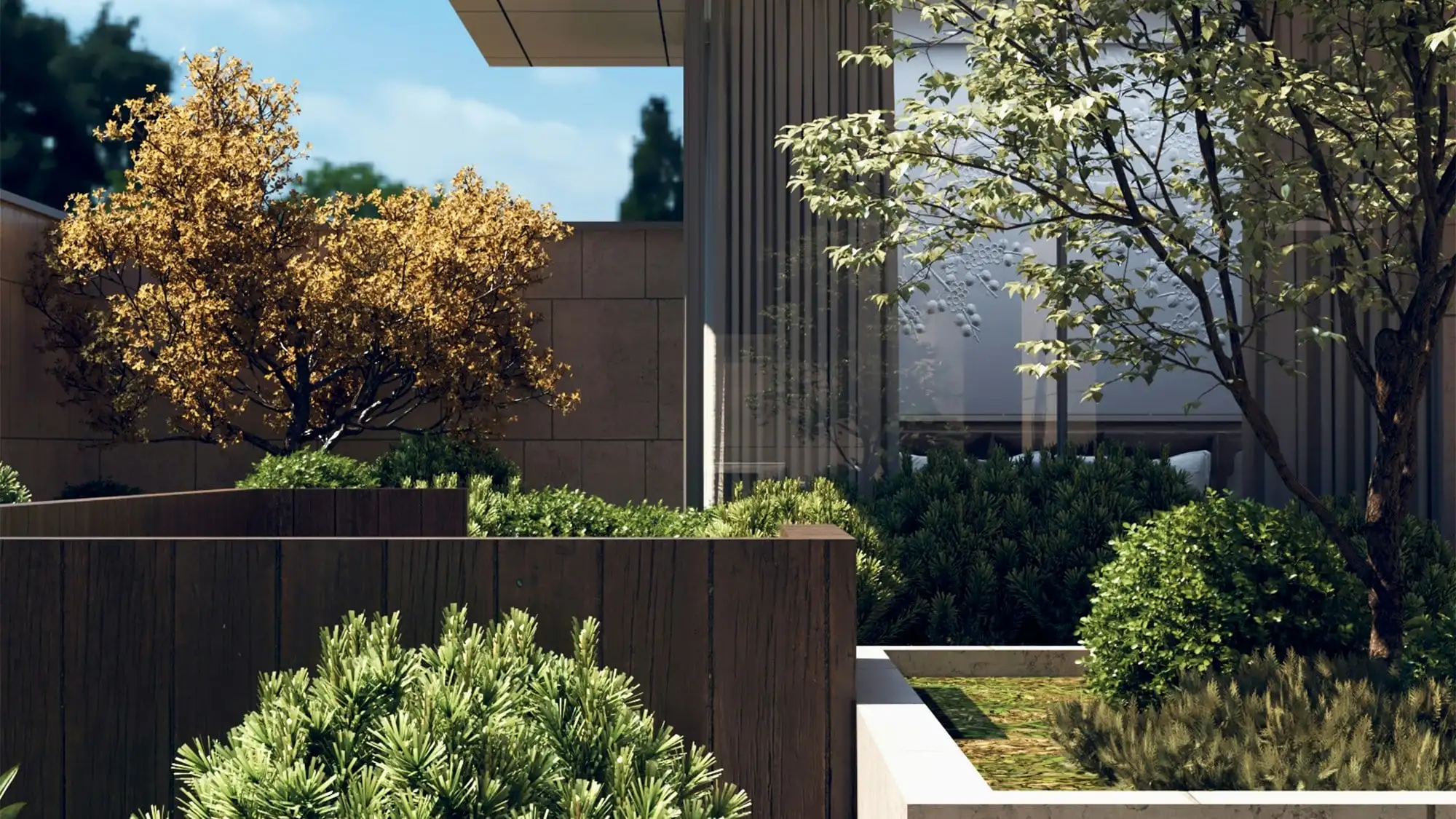
Fire-wise yards beside the reserve
Open ground close to the house, with paving, gravel and low, well-spaced plants, and the denser native planting kept further out toward the bush.
The builder's strip of turf turned into a proper front garden: a path to the door, edging, planting along the driveway and a spot for the bins, all within the estate's rules.
New streets put houses a few metres apart with bare steel fences between. Narrow screening plants and a slatted screen near the outdoor area give you privacy within a few seasons.
How do I find out if my Fletcher block is bush fire prone?
Check your address on the NSW RFS bush fire prone land map, or look at the Section 10.7 planning certificate from your purchase, which says whether the land is bush fire prone. Much of Fletcher is. If yours is, the house was probably built to a bushfire construction standard, and your development consent or construction certificate will say which. The garden should be designed so it doesn't work against it.
What should we plant close to the house on a bush fire prone block?
Keep the first few metres around the house open and low: lawn, paving, gravel and low plants with space between them, rather than shrubs or bark mulch against the walls. Taller natives and trees go further out, clear of the roof. If your development consent includes an asset protection zone, that comes first and the design follows it.
Can we use timber sleepers for a wall near the bush?
You can, but close to the house, concrete sleepers, block or stone are the better pick on a bush fire prone block because they don't burn. They also outlast treated pine in clay. Timber further out in the garden, away from the house, is less of a concern.
Our estate has rules about front gardens. Will you work to them?
Yes. Many newer estates have restrictions on the title, set by the developer, which can cover front fences, letterboxes and how the front garden is finished. Send us the documents from your purchase, or we'll look them up, and the design follows them from the first drawing.
We've just moved into a new Fletcher house. When should we start the garden?
Get the whole garden planned soon after handover, even if you build it in stages. Drainage, walls and side paths are easiest before sheds, fences and garden beds crowd the access down the side of the house. Turf, planting and the outdoor area can follow when the budget does.
Can we leave part of the backyard natural where it meets the bush?
Yes. A simple edge works well: a mown or gravel strip along the back fence, then local native planting on the bush side of it, and nothing weedy that will spread into the reserve. It keeps a clear gap between the garden and the bush, and it needs very little looking after.
Send us your garden
A few photos and a rough idea is enough. We'll ring to book a free site visit, then send a fixed quote with a drawing.